HIFU vs Skin Needling: Discover the Best Option for Your Skincare Needs
- Jenny HU

- 3 days ago
- 4 min read
When it comes to improving skin texture, reducing wrinkles, and achieving a youthful glow, two popular treatments often come up: HIFU and skin needling. Both offer unique benefits but work in very different ways. Choosing the right one depends on your skin type, concerns, and goals. This guide breaks down how each treatment works, their advantages, potential drawbacks, and what you can expect from the results.

What is HIFU?
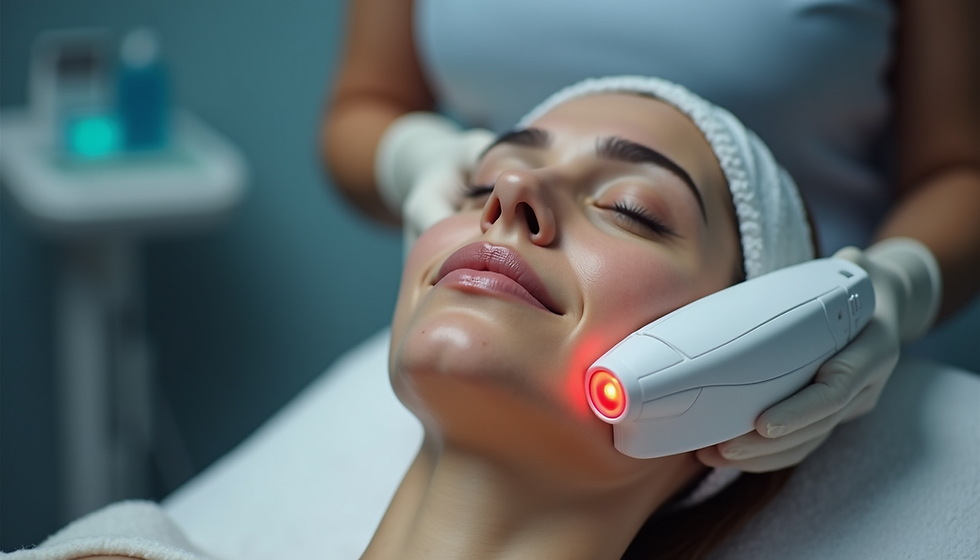
HIFU stands for High-Intensity Focused Ultrasound. It is a non-invasive treatment that uses ultrasound energy to target deep layers of the skin. The ultrasound waves heat the tissue beneath the surface, stimulating collagen production and tightening the skin.
How HIFU Works
Ultrasound energy penetrates deep into the skin, reaching the dermis and superficial muscular aponeurotic system (SMAS) layer.
The heat causes controlled injury, triggering the body’s natural healing response.
New collagen forms over time, lifting and firming the skin.
The treatment typically lasts 30 to 90 minutes depending on the area.
Benefits of HIFU
Non-surgical and requires no downtime.
Effective for lifting sagging skin on the face, neck, and décolletage.
Stimulates collagen production for gradual, natural-looking results.
Can improve fine lines, wrinkles, and skin texture.
Results can last up to 12 months or longer with maintenance.
Considerations Before Choosing HIFU
Best suited for mild to moderate skin laxity.
Not recommended for very loose or severely sagging skin.
Some patients may experience mild redness or swelling after treatment.
Results develop gradually over 2 to 3 months.
Multiple sessions may be needed for optimal results.
What is Skin Needling?
Skin needling, also known as microneedling or collagen induction therapy, involves using fine needles to create tiny punctures in the skin. These micro-injuries stimulate the skin’s natural healing process and boost collagen and elastin production.
How Skin Needling Works
A device with fine needles is rolled or stamped across the skin.
The controlled punctures trigger the release of growth factors.
New collagen and elastin fibers form, improving skin structure.
The treatment can be combined with serums or platelet-rich plasma (PRP) for enhanced effects.
Benefits of Skin Needling
Improves skin texture, tone, and firmness.
Reduces the appearance of scars, stretch marks, and pigmentation.
Can minimize fine lines and wrinkles.
Suitable for most skin types and tones.
Typically requires little downtime, with mild redness lasting a day or two.
Considerations Before Choosing Skin Needling
Multiple sessions (usually 3 to 6) spaced weeks apart are often needed.
Avoid if you have active skin infections, eczema, or severe acne.
Results build gradually and improve over several months.
Some discomfort during treatment, but usually tolerable with numbing cream.
Proper aftercare is essential to avoid irritation or infection.
Comparing HIFU and Skin Needling
| Feature | HIFU | Skin Needling |
|-----------------------|-------------------------------------|-------------------------------------|
| Treatment Type | Ultrasound energy | Mechanical micro-injuries |
| Target Area | Deep skin layers and SMAS | Epidermis and dermis |
| Main Benefits | Skin tightening and lifting | Texture improvement and scar reduction |
| Downtime | Minimal to none | Mild redness for 1-2 days |
| Number of Sessions | 1-3 sessions | 3-6 sessions |
| Pain Level | Mild discomfort | Mild to moderate, numbing helps |
| Suitable For | Mild to moderate skin laxity | Various skin concerns including scars |
| Results Timeline | 2-3 months for full effect | Gradual over several months |
Which Treatment is Right for You?
Choosing between HIFU and skin needling depends on your skin concerns and goals.
Choose HIFU if You Want:
A non-invasive lift for sagging skin on the face or neck.
To improve skin firmness without surgery.
Minimal downtime and gradual, natural results.
To target deeper layers of skin for collagen stimulation.
Choose Skin Needling if You Want:
To improve skin texture, reduce scars, or even out pigmentation.
A treatment suitable for most skin types.
To address fine lines and wrinkles with a focus on surface skin.
A more affordable option with multiple sessions.
Combining HIFU and Skin Needling
Some skincare professionals recommend combining both treatments for enhanced results. HIFU tightens and lifts deeper layers, while skin needling improves surface texture and tone. This combination can provide a comprehensive approach to skin rejuvenation.
What to Expect During and After Treatment
HIFU
The procedure feels like tiny pulses or warmth under the skin.
No needles or incisions involved.
Mild redness or swelling may appear but usually fades quickly.
Avoid heavy exercise or heat exposure for 24 hours.
Skin Needling
The treatment may cause slight pinprick sensations.
Skin will be red and sensitive for 1-2 days.
Use gentle skincare and avoid sun exposure during healing.
Follow aftercare instructions carefully to prevent irritation.
Final Thoughts on HIFU vs Skin Needling
Both HIFU and skin needling offer effective ways to improve your skin’s appearance without surgery. HIFU is ideal for lifting and tightening deeper skin layers, while skin needling excels at improving texture and reducing scars. Understanding your skin’s needs and consulting with a skincare professional can help you choose the best treatment.


Comments